

Knowing what to expect from any dental procedure makes the experience considerably more comfortable — and composite bonding is no exception. Patients who arrive at their appointment with a clear understanding of the process tend to feel more relaxed, ask better questions, and end up with results they are happier with, because they have been able to communicate their goals more effectively. Composite bonding is generally a straightforward, low-stress procedure, but the steps involved are specific and follow a logical sequence that it is worth understanding in advance.
Before Your Appointment
 The journey to composite bonding begins with a consultation. This is not simply an administrative formality — it is a genuinely important clinical and communicative step that shapes the entire treatment. At the consultation, your dentist will examine your teeth and gums thoroughly, check your bite, and take any radiographs that are needed to confirm the underlying health of the teeth to be treated. They will also ask you a series of questions about what you dislike about your smile, what you are hoping to achieve, and what your lifestyle and habits are like. Questions about grinding, diet, smoking, and how often you drink staining beverages are all clinically relevant to whether bonding is suitable and how long it is likely to last in your case.
This consultation is also your opportunity to share any reference images of smiles you admire, to ask about the realistic limits of what bonding can achieve for your specific teeth, and to discuss any concerns you have about the procedure itself. A good cosmetic dentist will set realistic expectations clearly and honestly, including explaining any situations where they feel a different treatment would serve you better. You should leave the consultation with a clear treatment plan, an accurate cost estimate, and an understanding of what the finished result should look like.
Preparation Before the Bonding Day
In most cases, very little specific preparation is required before a composite bonding appointment. If you are combining bonding with professional teeth whitening — which many patients do, to allow the composite to be shade-matched to a brighter baseline — your dentist will advise you to complete the whitening course and allow two weeks for the shade to stabilise before the bonding appointment. This is because freshly whitened teeth continue to adjust slightly in colour over the first fortnight, and bonding placed too soon may end up a shade darker than the final tooth colour.
Your dentist may also recommend completing any outstanding routine work — fillings, a scale and polish, or gum treatment — before the cosmetic appointment. It is not good practice to place aesthetic bonding on teeth or gums that are not in healthy condition, and addressing any underlying issues first means the cosmetic result will be more stable and longer lasting. On the day of your appointment, eat a normal meal beforehand if you wish, as there is typically no requirement to fast. Wearing comfortable clothing and avoiding very dark lipstick or lip liner can be helpful, as the dentist will be looking at the colour of your teeth against your natural skin tone throughout the procedure.
Step by Step: What Happens During a Composite Bonding Appointment
The table below walks through each stage of a typical composite bonding appointment, what happens at each point, and how long each stage generally takes. Timings are approximate and will vary depending on the number of teeth being treated and the complexity of the case.
| Stage | What Happens | Approximate Duration |
|---|---|---|
| Shade selection | Dentist selects composite shades to match or improve your tooth colour using a shade guide under natural and surgery lighting | 5–10 minutes |
| Tooth preparation | Tooth surface is cleaned; a mild conditioning gel is applied briefly to create microscopic texture for adhesion; adhesive resin is painted on | 5–10 minutes per tooth |
| Composite application | Resin is applied in layers, each sculpted to the desired shape and hardened with a curing light before the next layer is added | 15–30 minutes per tooth |
| Shaping and bite check | Dentist refines the contours and checks your bite using articulating paper; adjustments are made to ensure the restored tooth fits correctly in your bite | 5–15 minutes |
| Polishing | Bonded surface is polished using a series of progressively finer polishing discs and pastes to achieve a smooth, lustrous finish | 5–10 minutes per tooth |
| Review and aftercare advice | Dentist shows you the result, answers any questions, and provides written aftercare instructions | 5–10 minutes |
What Does the Procedure Feel Like?
For the vast majority of patients, composite bonding is a comfortable experience. Because the procedure typically involves adding material to the tooth rather than removing it, there is usually no need for a local anaesthetic injection. You may feel some pressure or vibration if the dentist needs to make minor adjustments to the tooth surface, but this is generally not painful. If you have pre-existing sensitivity in the teeth being treated, or if any enamel adjustment is required to create the ideal surface for bonding, your dentist may offer a local anaesthetic to keep you comfortable throughout.
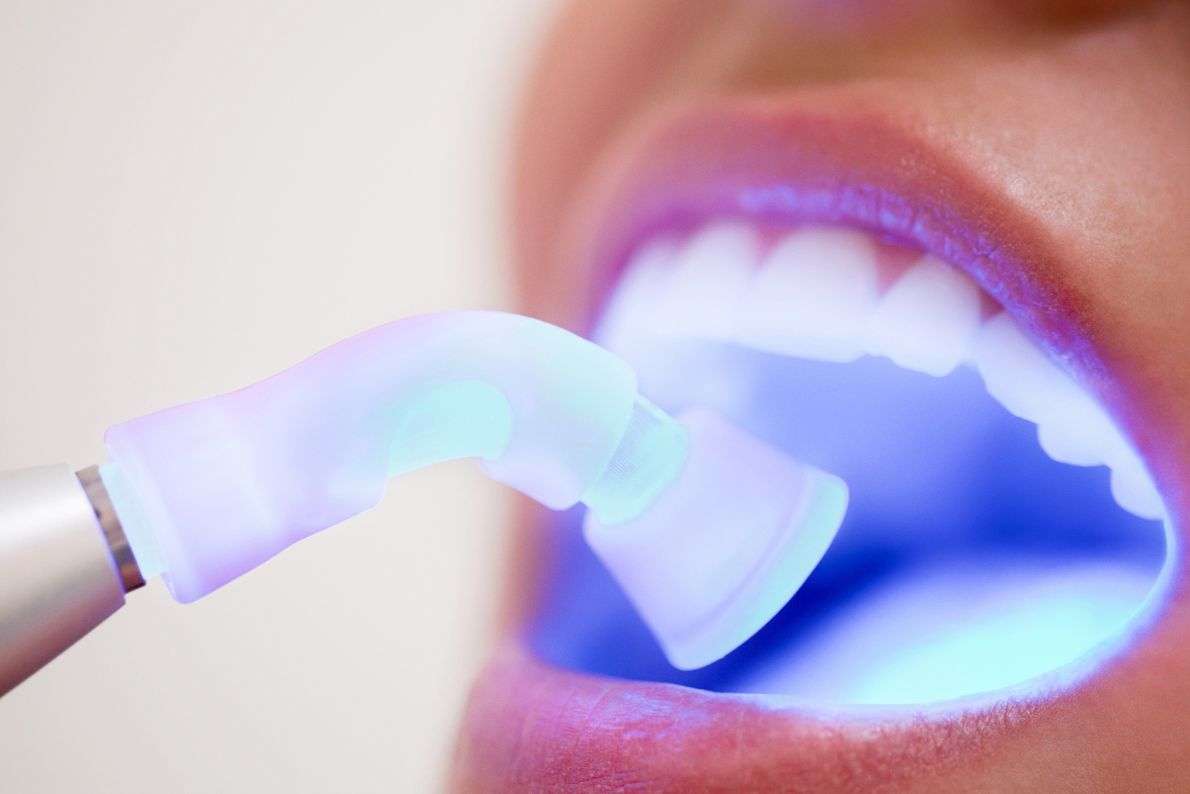
The curing light used to harden the composite is a bright blue LED or UV light that shines directly onto the tooth for 20 to 40 seconds per layer. Your dentist will provide protective eyewear to shield your eyes during this step. The light itself does not produce significant heat and should not cause any discomfort. Some patients notice a faint taste from the conditioning gel, which is acidic and smells slightly vinegary — this is entirely normal and the gel is thoroughly rinsed away before the composite is applied.
Immediately After Your Appointment
Once your composite bonding is complete, you can eat and drink as normal — there is no setting or curing period to wait for after you leave the surgery, as the material is fully hardened by the curing light during treatment. Your dentist will usually advise you to avoid deeply staining foods and drinks for at least 24 to 48 hours immediately after bonding, as freshly polished composite can be marginally more susceptible to surface staining before the outermost layer has fully settled. Tea, coffee, red wine, and curries are the main things to be mindful of in the immediate post-treatment period.
Some patients notice a slight change in the way their bite feels in the hours after treatment, particularly if multiple teeth have been bonded or if any reshaping was carried out. This generally resolves within a day or two as you adjust to the new tooth contours. If your bite feels significantly off or you experience any sharp edges or rough spots that your tongue keeps returning to, contact your dentist — these are easily and quickly resolved with a very minor adjustment in the chair. You can read more about the materials and techniques involved in dental bonding on Wikipedia’s dental bonding page, which provides a helpful scientific background to the procedure.
Long-Term Maintenance of Your Composite Bonding
Composite bonding is a durable treatment when properly maintained, but it does require a degree of ongoing care and awareness. Brush twice daily with a soft-bristled toothbrush and a fluoride toothpaste — avoid abrasive whitening toothpastes, which can dull the polished surface of composite over time. Floss daily, including at the margins of bonded teeth, to prevent plaque accumulation at the edges of the restoration. At your routine dental appointments — which ideally should be every six months — your hygienist can professionally clean and polish your bonded teeth using instruments and pastes that are compatible with composite, restoring their shine and removing any surface staining that has built up.
Composite bonding typically lasts between five and seven years before any significant maintenance is needed, though with attentive care some patients get considerably longer out of their bonding before a refresh is required. When bonding does begin to show its age — through gradual colour change, minor chipping at the edges, or surface roughening — the repair or replacement process is far simpler and less costly than with porcelain veneers, as new composite can be bonded directly over or adjacent to existing material in most situations.
Booking Your Composite Bonding Consultation
If you are curious about what composite bonding could achieve for your smile and would like to understand the process in more detail, we are always happy to talk it through. At Essential Dental Care in Polwarth, Edinburgh, we offer detailed consultations in which we examine your teeth, listen carefully to your goals, and give you an honest assessment of whether bonding is likely to deliver the outcome you are looking for. To arrange a consultation, call our team on 0131 229 1806.