

Losing a tooth can affect far more than your smile. It can change the way you eat, alter how you speak, and gradually shift your remaining teeth out of alignment. Dental bridges have been used for decades as a reliable, fixed solution for replacing one or more missing teeth, and for many patients they offer an excellent balance of function, aesthetics, and value. Understanding what they involve is the first step towards deciding whether they might be right for you.
A dental bridge is a fixed prosthetic device that literally bridges the gap left by a missing tooth. It consists of a false tooth — called a pontic — anchored in place by crowns fitted over the teeth on either side of the gap. These supporting teeth are known as abutment teeth. Once fitted, a bridge is cemented permanently in place, meaning it behaves much like a natural tooth and does not need to be removed for cleaning.
The Different Types of Dental Bridge
Not every patient needs the same type of bridge, and your dentist will recommend the most suitable option based on the location of the missing tooth, the condition of your surrounding teeth, and your overall oral health. There are several main types to be aware of.
A traditional bridge is the most common type. It involves placing crowns on the two teeth either side of the gap, with the pontic suspended between them. This is a strong, stable solution suitable for most areas of the mouth, including the back teeth where biting forces are greatest.
A cantilever bridge uses only one abutment tooth for support rather than two. This approach is typically used when there is only one natural tooth adjacent to the gap, or when it is preferable to avoid preparing a healthy tooth on the other side. It is less common for back teeth due to the greater forces involved in chewing.
A Maryland bridge (also called a resin-retained or adhesive bridge) takes a more conservative approach. Instead of crowns, it uses metal or porcelain wings bonded to the backs of the adjacent teeth. Very little preparation of the supporting teeth is required, making it a popular option for front teeth where preserving tooth structure is a priority.
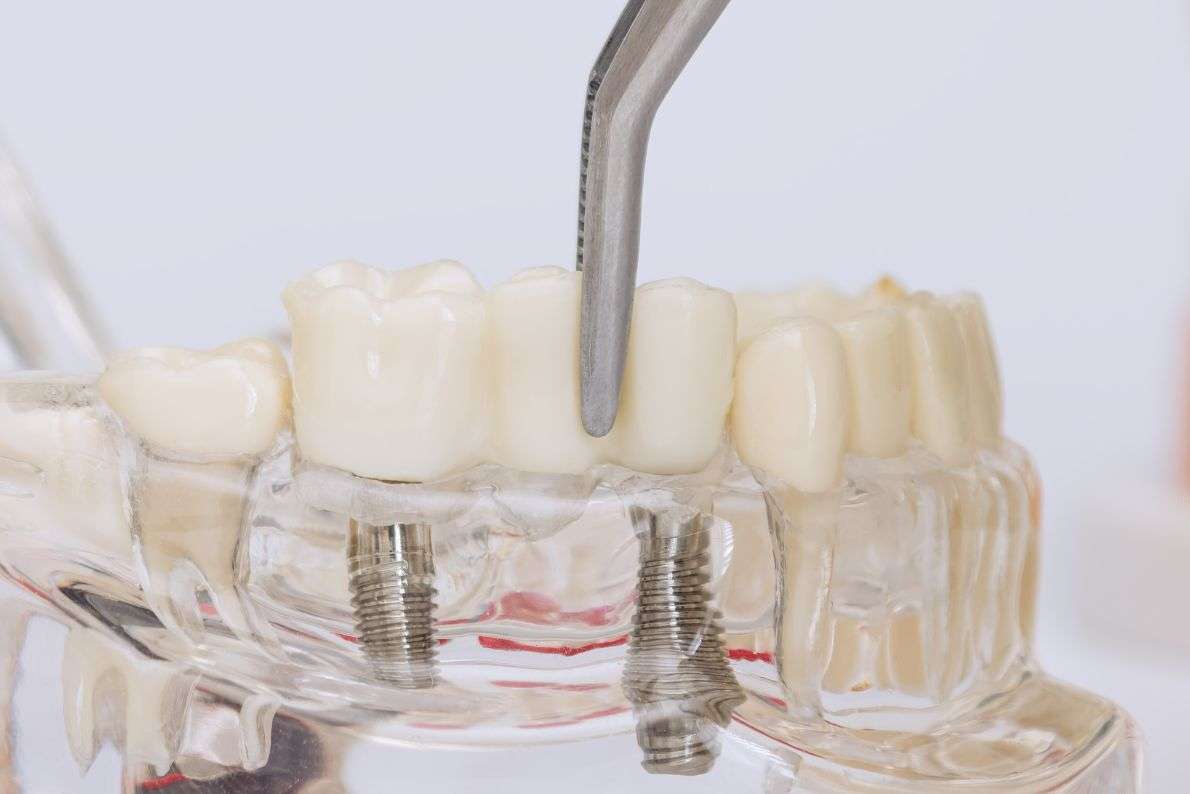
Finally, an implant-supported bridge anchors one or more pontics to dental implants rather than natural teeth. This avoids the need to crown healthy adjacent teeth entirely, though it does involve a surgical procedure and a longer treatment timeline.
How Do You Know If a Bridge Is Right for You?
A dental bridge is likely to be worth considering if you have one or more missing teeth and the neighbouring teeth are healthy enough to support crowns, or if you are not a candidate for dental implants due to insufficient bone volume, medical reasons, or personal preference. Bridges are also generally faster to complete than implants and do not require surgery, which makes them an attractive option for patients who want a fixed result without a prolonged treatment process.
You may not be well suited to a bridge if the adjacent teeth are in poor health and unlikely to support the additional load, or if significant bone loss has already occurred under the gap. In those cases, a partial denture or an implant may be recommended instead. Your dentist will carry out a thorough examination before making any recommendation.
What Are the Benefits of a Dental Bridge?
- Restores your ability to chew and speak normally
- Prevents adjacent and opposing teeth from drifting or over-erupting
- Supports the natural contour of your face, helping to prevent the sunken appearance that can follow tooth loss
- Fixed in place — no need to remove it at night or for cleaning
- A well-made bridge can last ten years or longer with good oral hygiene
- Less invasive than implants, with no surgical procedure required for traditional or Maryland bridges
- Can be matched closely to the shade of your natural teeth for a natural appearance
Are There Any Drawbacks to Consider?
No dental treatment is without its trade-offs, and it is worth being informed before going ahead. With a traditional bridge, the abutment teeth need to be shaped and prepared to receive crowns, which involves removing some healthy tooth structure. This is a permanent change, so it is not a decision to take lightly. The area under the pontic also requires careful cleaning with floss threaders or interdental brushes to prevent plaque build-up.
Bridges can also become loose or fail over time, particularly if the supporting teeth develop decay or gum disease. Maintaining excellent oral hygiene and attending regular check-ups are essential to getting the most from your bridge.
How Does a Dental Bridge Compare to Other Options?
| Feature | Dental Bridge | Dental Implant | Partial Denture |
|---|---|---|---|
| Fixed in place | Yes | Yes | No (removable) |
| Surgery required | No | Yes | No |
| Affects adjacent teeth | Yes (traditional/cantilever) | No | Minimal |
| Typical lifespan | 10+ years | 15–20+ years | 5–10 years |
| Treatment time | 2–3 weeks | 3–9 months | 2–4 weeks |
| Bone preservation | No | Yes | No |
How Is a Dental Bridge Fitted?
The fitting process typically takes place over two or three appointments. At the preparation visit, the abutment teeth are shaped under local anaesthetic, impressions or a digital scan are taken, and a temporary bridge is placed to protect the teeth while the permanent restoration is made. The laboratory fabricates the bridge over one to three weeks, then at the fitting appointment the temporary bridge is removed and the permanent one is checked for fit, shade, and bite before being cemented into place. Most patients are surprised by how manageable the process feels once they experience it.
What Does the NHS Say About Dental Bridges?
According to NHS guidance on dental treatments, bridges are a fixed replacement for missing teeth and are generally very successful, with 80% of conventional bridges lasting for ten years or more. The NHS also notes that bridges may be available as an NHS treatment in certain clinical circumstances, though many patients choose to have them completed privately for aesthetic or material reasons.
What Happens If You Do Nothing About a Missing Tooth?
Many patients put off tooth replacement, assuming the gap will not cause problems beyond aesthetics. Unfortunately, leaving a missing tooth untreated can set off a chain of events that becomes progressively harder to manage. Without a tooth root in the socket, the jawbone beneath begins to resorb — shrinking gradually over months and years. This can alter the shape of your face and reduce the amount of bone available to support a future implant if you change your mind later.
The teeth on either side of the gap and the tooth directly above or below it are also affected. Without the neighbouring tooth to brace against, they can begin to tilt into the space or over-erupt (grow further out of the gum), which can disrupt your bite and make those teeth harder to clean. In some cases this can lead to increased wear, sensitivity, or the need for orthodontic treatment to realign them. Acting sooner rather than later — whether with a bridge, implant, or partial denture — protects the stability of your whole mouth.
Looking After Your Bridge
Once your bridge is fitted, good maintenance is straightforward but important. Brush twice daily with fluoride toothpaste, and use a floss threader or superfloss to clean underneath the pontic every day. Your dentist may also recommend an interdental brush for the spaces around the abutment teeth. Regular hygienist appointments can help keep the bridge and surrounding gum tissue in good condition.
Avoid habits that could put excessive strain on your bridge, such as chewing very hard foods or using your teeth to open packaging. If you grind your teeth at night, let your dentist know — a custom night guard can protect both your natural teeth and your bridge from unnecessary wear.
Taking the Next Step
At Essential Dental Care, we have helped many Edinburgh patients restore their smiles with well-crafted dental bridges tailored to their individual needs. If you are missing one or more teeth and would like to find out whether a bridge could be the right solution for you, we would be happy to discuss your options at a consultation. Give us a call on 0131 229 1806 to book your appointment — our friendly team will guide you through everything from the first visit to the final fit.