

If you’ve ever left a dental hygiene appointment feeling that your teeth could have been cleaner — or perhaps a little tender from the scraping and scaling — you’ll be pleased to know that dental technology has moved on considerably. EMS Airflow Guided Biofilm Therapy (GBT) is a modern approach to professional dental cleaning that is quietly transforming the experience for patients across the UK. Rather than relying solely on traditional metal instruments, GBT uses a precisely directed warm water spray combined with a fine, specially formulated powder to remove the soft bacterial deposits that build up on and between your teeth every single day. The system was developed by EMS (Electro Medical Systems), a Swiss dental technology company with decades of experience in dental hygiene innovation. Their Guided Biofilm Therapy protocol isn’t simply a new gadget — it’s a complete rethinking of how a hygiene appointment should be structured, from the moment you sit in the chair to the moment you leave with genuinely clean teeth.
 What Is Dental Biofilm, and Why Does It Matter?
 What Is Dental Biofilm, and Why Does It Matter?
Before understanding what GBT does, it helps to understand what it’s targeting. Dental biofilm — commonly known as plaque — is a sticky, organised community of bacteria that forms on the surfaces of your teeth within hours of eating. Left undisturbed, this biofilm hardens into tartar (also called calculus), which cannot be removed by brushing alone and creates an environment where harmful bacteria can thrive. Over time, this contributes to tooth decay, gum disease, and in more serious cases, bone loss around the teeth.
The good news is that soft biofilm is actually quite easy to remove when the right tools are used. The challenge has always been making that removal thorough, comfortable, and consistent — and that’s precisely where Guided Biofilm Therapy excels. For a broader overview of how bacteria affect your oral health day to day, the NHS: Healthy Teeth and Gums guidance offers excellent, accessible reading.
How Does the GBT Process Actually Work?
 How Does the GBT Process Actually Work?
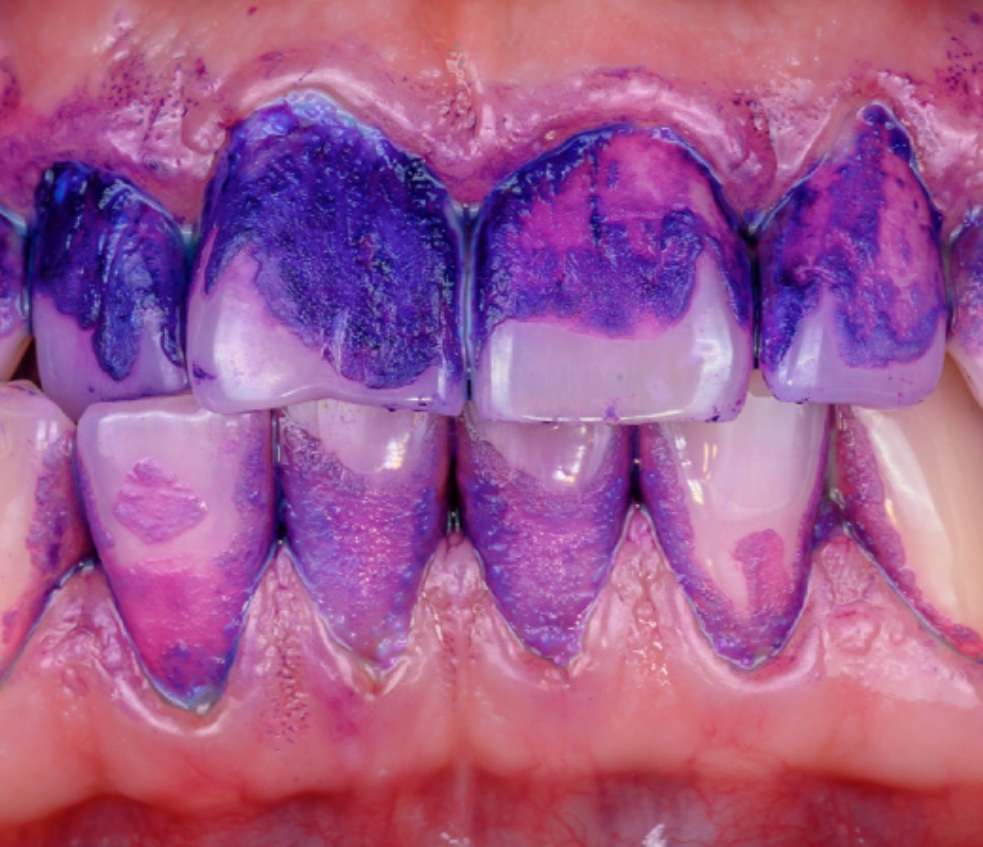
One of the most reassuring aspects of GBT is how methodical it is. A trained dental hygienist begins by applying a disclosing solution to your teeth — a safe, temporary dye that stains biofilm in different colours depending on how mature it is. Younger biofilm shows up in one shade, older and more established deposits in another. This isn’t just visually interesting; it gives your hygienist a precise map of exactly where cleaning is needed, rather than working blindly across every surface.
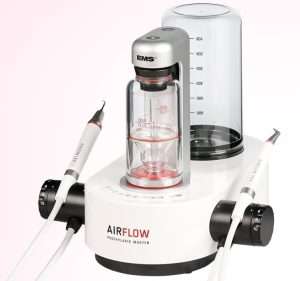
With that map established, the hygienist uses the Airflow handpiece to direct a controlled stream of warm water, air, and erythritol powder at the biofilm. Erythritol is a very fine, biocompatible powder that is gentle on tooth enamel and soft tissues but highly effective at dislodging bacterial deposits. Crucially, the warm temperature of the spray makes the process far more comfortable than cold water instruments, which can cause sensitivity — particularly around exposed root surfaces or in patients who naturally have more reactive teeth.
Once the soft biofilm has been cleared away, the hygienist can clearly see whether any hardened tartar remains. At this point, EMS’s Piezon technology — an ultrasonic scaler — is used where needed to remove calcified deposits. Because the biofilm has already been cleared, this phase tends to be quicker and requires far less pressure than in conventional cleaning appointments. The entire process is more targeted, meaning less time spent working unnecessarily on already-clean areas.
How GBT Compares to Conventional Cleaning
To appreciate the difference GBT can make, it’s worth looking at how it stacks up against traditional professional cleaning methods across several key areas:
| Feature | Traditional Scaling & Polishing | EMS Airflow Guided Biofilm Therapy |
|---|---|---|
| Biofilm detection | Visual assessment only; relies on hygienist’s experience | Disclosing dye used to map biofilm precisely before treatment |
| Primary cleaning method | Metal scalers and rotating rubber cup polish | Warm water, air, and erythritol powder spray (Airflow) |
| Patient comfort | Can cause sensitivity; cold water and pressure common | Generally more comfortable; warm spray, minimal pressure |
| Suitable for implants & orthodontic work | Metal instruments may scratch implant surfaces | Safe for implants, braces, veneers, and crowns |
| Soft tissue impact | Possible irritation from instrument contact | Minimally invasive; erythritol powder is biocompatible |
| Approach to tartar removal | Scaling performed across all surfaces | Ultrasonic scaling used only where calculus is confirmed |
Who Is GBT Suitable For?
 Who Is GBT Suitable For?
One of the real strengths of this approach is its versatility. GBT is suitable for the vast majority of dental patients, including those who have historically found hygiene appointments uncomfortable. People with sensitive teeth often find the warm spray a revelation compared to traditional cold-water instruments. Those with dental implants benefit especially, because conventional metal scalers can scratch and damage implant surfaces over time, potentially compromising their longevity — the Airflow system carries no such risk.
Patients undergoing orthodontic treatment, whether with fixed braces or clear aligners, also stand to gain considerably. Cleaning around brackets and wires is notoriously difficult, and biofilm has a tendency to accumulate in the awkward spaces that toothbrushes simply cannot reach effectively. The targeted spray from an Airflow handpiece can access these areas with ease, reducing the risk of decalcification — those white marks that can appear on teeth if plaque is allowed to sit against enamel during treatment.
GBT is equally well suited to patients managing periodontal (gum) disease or those who are at higher risk of developing it. By removing biofilm thoroughly and consistently at every appointment, the bacterial load in the mouth is kept low, which helps to control inflammation and prevent the deeper pocketing that characterises advanced gum disease.
What to Expect at a GBT Appointment
If you’re considering booking a GBT hygiene session for the first time, you might find the following outline helpful:
- Assessment and disclosure: Your hygienist will examine your mouth and apply the disclosing dye to identify and categorise biofilm deposits.
- Airflow cleaning: The warm spray is used to remove soft biofilm from all tooth surfaces, around the gumline, and in pockets if needed.
- Piezon scaling (where required): Any remaining hardened tartar is removed with the ultrasonic scaler, using minimal force because the surrounding area is already clean.
- Check and personalise: Your hygienist reviews the results, confirms everything is clean, and tailors advice to your individual home-care routine.
The appointment typically takes between 45 minutes and an hour, though this varies depending on your oral health baseline and how long it has been since your last professional clean. Most patients report that the experience feels noticeably different from conventional hygiene visits — quieter, less abrasive, and considerably more comfortable overall.
Caring for Your Teeth Between Appointments
Even the most thorough professional cleaning only addresses what has accumulated since your last visit. The real work of maintaining a healthy mouth happens at home, twice a day. GBT appointments work best when supported by a consistent home-care routine: brushing for two minutes morning and evening with a fluoride toothpaste, cleaning between the teeth daily with floss or interdental brushes, and being mindful of how frequently you consume sugary or acidic foods and drinks. Your hygienist can advise on the right tools and techniques for your specific situation — particularly if you have implants, braces, or areas of recession that require a slightly different approach.